
Category: Uncategorized
-
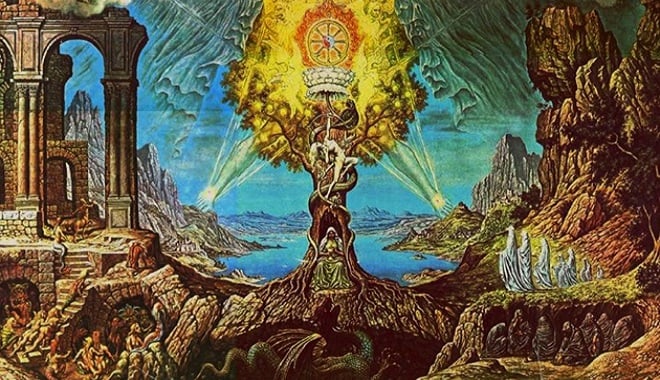
Church History in Chunks – Part 5: Gnosticism
Gnosticism: the First Heresy. John the apostle’s first letter (First John and not the Gospel of John) was aimed straight at the Gnostics. At some point in the first century A.D., Jewish and Christian sects amalgamated the Old Testament system, Christian theology, diverse local myths, Jewish cabbalism, paganism and finally Plato’s dualism, and voila! the…
-
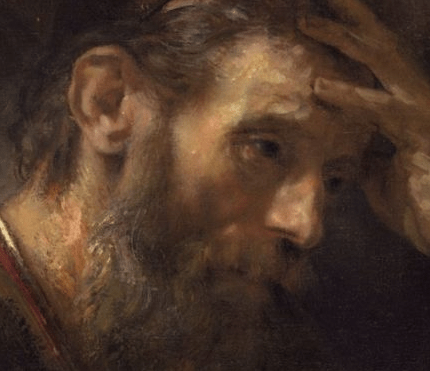
Church History in Chunks – Part 4: Denominations
The First Attempt at Denominations. As early as the 50s A.D. there was a division growing among the nascent Christian church. As the apostle Paul notes in his letter to the Corinthians, some believers were creating denominations around Paul’s teachings. Others followed Peter and some preferred a preacher named Apollos. Paul quickly stepped in to…
-

DNA as language
Looking at the language in our cells. Binary code language is any “alphabet” made up of only 2 letters. Such systems date back to at least 1679 when a french mathematician by the name of Gottfried Leibniz discovered that using the numbers 1 and 0 could create a mathematical language able to store any amount…
-

Could Jesus Have Survived the Cross?
A medical view of crucifixion Ahmadiya Muslims teach that Jesus fled to India after swooning on the cross and crawling out of his grave. In fact, the town of Srinagar, Kashmir supposedly houses his final burial site. The Qur’an teaches that Jesus was replaced by a substitute and never hung upon the cross. Skeptical scholars…
-
Intellectual Heritage of Christianity
Re-Claiming the Tradition of Classical Christian Thought. The scientific revolution is credited to a 13th century Italian friar named Thomas of Aquinas. William of Ockham, another friar, is the englishman after whom the logic tool “Ockham’s Razor” was named. Chemistry’s founder, Robert Boyle was a man of faith. Perhaps the world’s greatest mathematician, Blaise Pascal,…
-
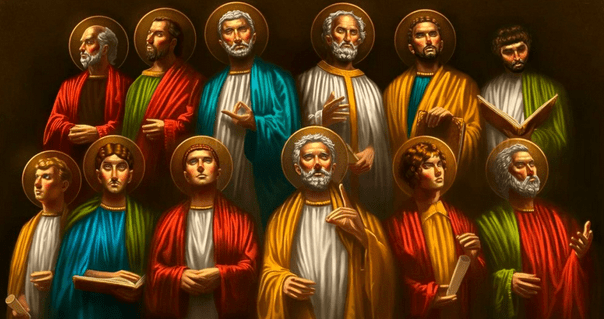
Church History in Chunks – Part 3: Apostles
The Role of the Apostles. Roman Catholics claim the Papacy is an institution begun by Christ as recorded in Matthew 16:13-19. In this passage, Jesus is asking His disciples who they think He is. As Jesus gained notoriety, rumours swirled because of His miracles, exorcisms and the authority of His sermons. Some thought He was…
-

Church History in Chunks – Part 2: The Disciples
Jesus and His Disciples Jerusalem was home to one of the wonders of the ancient world, Herod’s massive Temple complex. The huge grounds spread out for 150,000 square meters — the equivalent of 15 modern city blocks — and its central Temple building rose 15 stories into the ancient skyline. World class for that time.…
-

Church History in Chunks – Part 1: Orthodoxy & Catholocism
What is Orthodoxy and Catholicism? Until the Great Schism of 1054 A.D. the Christian world did not think of itself as divided but as a single faith. Sure there was plenty of diversity but Christendom was the same sport. Different teams playing in the same league. Early church father St. Ignatius gave us the first recorded…
-

Archaeology and the Bible
The science of history includes the discipline of archaeology. What happens when we apply the evidential test to the Judeo-Christian scriptures.
-

The Canon of the Bible
In the ever-evolving world, the art of forging genuine connections remains timeless. Whether it’s with colleagues, clients, or partners, establishing a genuine rapport paves the way for collaborative success.
-

Shroud of Turin
Challenges in business are a given, but it’s our response to them that defines our trajectory. Looking beyond the immediate obstacle, there lies a realm of opportunity and learning.

