
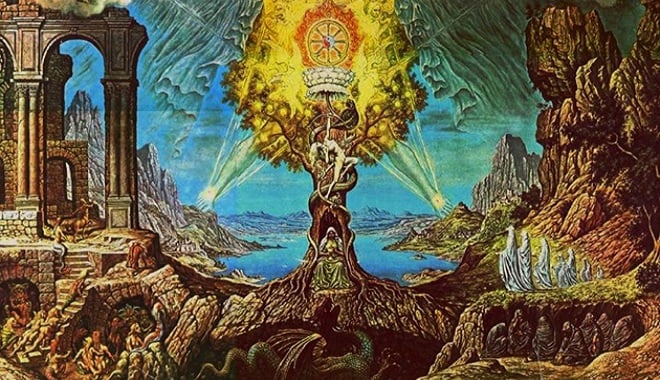
Gnosticism: the First Heresy.

Human nature has not changed. Then as now, people stitched together belief systems by scrap-booking fashionable ideas alongside ancient heresies.
Gnosticism was born in that strange womb—a hybrid of Platonic speculation, mystery religion elitism, and parasitic misuse of biblical language.
John the apostle’s first letter (First John and not the Gospel of John) was aimed straight at the Gnostics. At some point in the first century A.D., Jewish and Christian sects amalgamated the Old Testament system, Christian theology, diverse local myths, Jewish cabbalism, paganism and finally Plato’s dualism, and voila! the wretched religious alchemy of Gnosticism was born. From the Greek word “gnosis” which means “to know” this burgeoning heretical sect became popular and began infiltrating the church, promising salvation through secret insight rather than repentance and faith. Justin Martyr, Irenaeus and historian Eusebius all blame false convert Simon the Sorcerer (Acts 8:9-24) for originating the branch of this heresy that infiltrated the Church.
In the first centuries A.D., Socratic thought reigned supreme and heavily influenced the Roman Empire and its territories, which included the Hebrew world. Think of the modern day naturalism that permeates our schools, entertainment and culture. Greek platonic philosophy of creation taught that an unknowable force named the Demiurge was the creator of our material world.
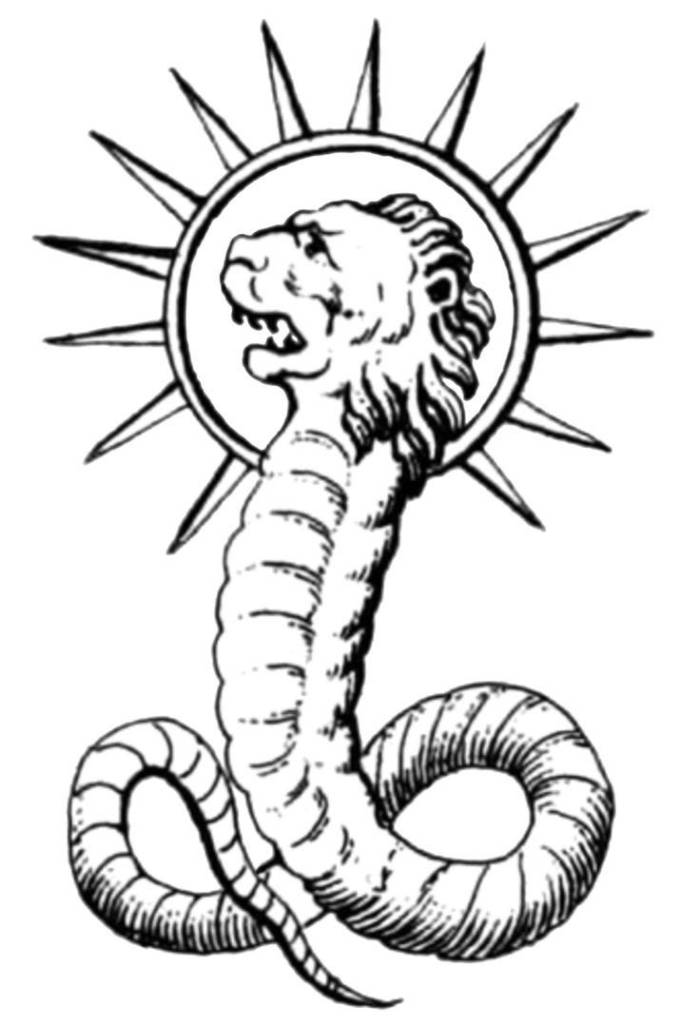
Proposed depiction of Plato’s Demiurge – distant, unknowable creator of the physical world and our souls
First century Gnostics added their layer to Plato’s Demiurge by claiming the god Sophia (wisdom) was the deity that unleashed this Demiurge to birth our cosmos. Secret rites and writings were necessary for initiates to attain true enlightment. Not faith or good works, but specific knowledge hidden within the Gnostic communities.
The Old Testament had sparse to say about the afterlife nor did local pagan myths so Gnostics piggy backed on this to shroud death in mystery. They stretched the obscurity even further, believing we knew very little about our creators — Sophia and the Demiurge — and could only guess as to how to live on earth in a way pleasing to them. This grossly violated the Hebrew Scripture, which painstakingly chronicled God’s Law and His demands on humanity.
Undeterred, the heretical Gnostics persisted in teaching that once death took our physical bodies, our souls — which remained untouched by the sins of the body — returned, pure, to its creators. Some Gnostics lived strict lives, careful not to indulge in bodily sins, believing they could achieve sinlessness. Others indulged in debauchery as they believed bodies and eventually the material realm would melt away and therefore no true sins of the body would touch the sould and have eternal consequences.
Like an ugly monster this heresy moved through the young church, confusing converts. This is why the apostle John opens his first letter with a clear counter strike:
1 What was from the beginning, what we have heard, what we have seen with our eyes, what we have looked at and touched with our hands, concerning the Word of Life— 2 and the life was manifested, and we have seen and testify and proclaim to you the eternal life, which was with the Father and was manifested to us— 3 what we have seen and heard we proclaim to you also, so that you too may have fellowship with us; and indeed our fellowship is with the Father, and with His Son Jesus Christ. 4 These things we write, so that our joy may be made complete.
Not only is the creative Demiurge not an unknown mystery, John claims that he and the disciples saw, touched, listened to, ate with and personally knew the Creator. And we know His name as well as His Father. There was no secret knowledge as the Creator walked and talked openly in public. And the rest of the opening chapter of John’s first letter makes it clear that how we behave in the body — despite the loose living Gnostics’ claim — certainly impacts our soul and our eternal destination:
6 If we say that we have fellowship with Him and yet walk in the darkness, we lie and do not practice the truth;
John goes on to state that no one is sinless — contrary to the ascetic Gnostics’ belief:
8 If we say that we have no sin, we are deceiving ourselves and the truth is not in us.
One of the first major heresies landed in the lap of the apostle John. Although he addressed it, orthodox Christian leaders in the early Church had to hunt it down and repeatedly kill it before it finally died in the 200s A.D. Although the official Gnostic religion mostly ebbed away, it is perhaps the most prevalent view held by most modern Westerners. Those identifying as “spiritual but not religious” describe a “higher power” that is out there and once it created us it stayed distant and mysterious. Who can know it? Or its direct claims on us? Which creates a safe distance between the individual and accountability towards the Creator. This is the spirit of Gnosticism. It still contradicts the direct claims of the Christ that walked among us.

Depiction of Paul’s beheading in Rome circa 67 AD
Our next chunk will cover the harsh path that the first several generations of Christians had to walk as the Church was watered by the blood of the martyrs.




 What Christians Believe