
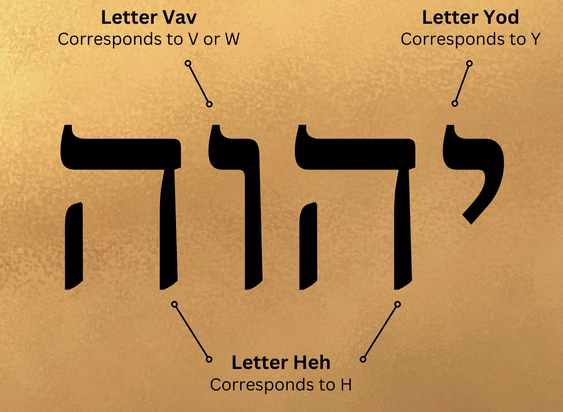
How Do We Pronounce God’s Personal Name
Ancient Hebrew — pre 500 BC — had no written vowels but the spoken language did. So living traditions conveyed the original pronounciation of the Tetragrammaton (i.e.: YHWH).
Jewish Greek sources from late second century BC Dead Sea Scrolls preserve forms like ΙΑΩ (Iaō), which strongly support an initial “Yah-” sound. We are academically safe when concluding the 3rd century B.C. Hebrew scholars would be familiar with the vowel sound that had traditionally been given to God’s Name.
During the 13th century, medieval Christian scribes mixed “Yah-o” (ΙΑΩ) with the vowels from the word “Adonai” (LORD). This gave us the Greek pronouncement Iehoua which was later Latinized as Jehovah.
‘Adonai’ is the Hebrew word for ‘Lord’ and was used to substitute for YHWH because the Hebrew faithful felt it was irreverent to casually speak God’s personal Name. In order to preserve the original text — which says YHWH — but to remind readers to pronounce ‘Adonai’ instead, Hebrew scribes stuck the vowels ‘a,’ ‘o,’ and ‘a’ in between the consonants of YHWH forming the new written form: YaHoWaH. Written Hebrew vowels were eventually popularized during the 6th century AD and the Hebrew translators of the Masoretic text used the form YaHoWaH instead of YHWY or Lord. Unfortunately this was misread by Christians.
Medieval Christian scribes mistook the Hebrew “YaHoWaH” and transliterated it into Greek as Iehouhah. During this period the “J” letter and sound were developed and slowly replaced “I” and the term JEHOVAH became a common version of YHWH in Christian bibles.
So do we have an absolute, sure fire way to know exactly how to pronounce God’s Name?
No.
However, the earliest physical evidence, preserved in Dead Sea Scroll–era Jewish Greek manuscripts (e.g., ΙΑΩ / Iaō), together with Hebrew theophoric names and early testimony, brings us as close as historically possible, strongly supporting a pronunciation beginning with “Yah–.”






 What Christians Believe