The Teaching of the Apostles?
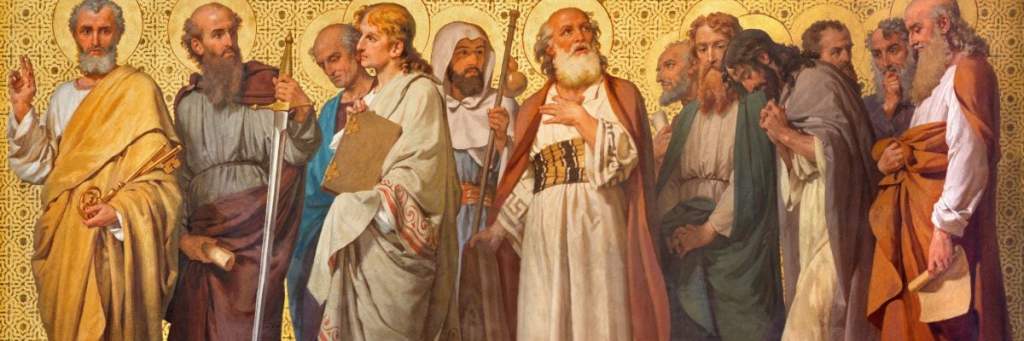
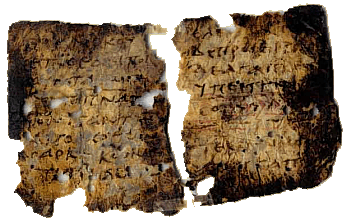
Our oldest two fragments of the Didache date to the late 4th and early 5th centuries AD. Scholars and linguists believe the original was written between 70 – 150 AD. Containing approximately 2,200 Greek words, it is comprised of 16 short chapters. Its opening forms its reputation as being penned by the Apostles:
“The Teaching of the Apostles…”
This appears in the Latin Doctrina Apostolorum which is dated between the 9th and 11th centuries AD and not in the earlier fragments (yet this is because these early fragments are not complete and do not contain the beginning of the Didache).
“The Lord’s teaching to the nations by the Twelve Apostles…”
…is only found in the 1056 AD Bryennios Greek manuscript. The text itself is anonymous. Christendom historically has simply called it “The Teaching” (i.e.: Didache in Greek) or “Two Ways.”
Chapters 1 through 6 speak of the ‘two ways’ one can live their life. One leads to life and the other… well, I’ll give you a wild guess.
Chapters 7 to 10 list how Christians are to perform baptism, fasting, prayer, feasts and the Lord’s Supper (i.e.: Eucharist).
Chapters 11 to 15 detail how the church’s leadership is to be organized and how to perform church discipline.
The sixteenth and final chapter warns of vigilance as we wait for the End Times.
Did the Twelve Apostles Author the Didache?
By the end of the first century we possessed a writing known as the “Epistle of Barnabas.” Supposedly written by Paul’s companion (Acts 4:36) it contains several passages that are nearly identical to many of those found in the first 6 chapters of the Didache. General consensus among scholars is that both documents borrow from an earlier written or spoken source.
In the late 190s AD, Clement of Alexandria quotes a line from Didache’s third chapter:
“Son, be not a liar; for falsehood leads to theft”
- Stromata, book 1 chapter 20
Clement does not say where he got this line but calls it ‘Scripture.’ Yet this line is only found in Didache 3:5, showing he saw this text as inspired.
The church’s first historian, Eusebius of Caesarea, in 324 AD placed the Didache with other writings whose authenticity he questioned. He doesn’t condemn its contents but puts it outside the penmanship of the Twelve Apostles. We should take into consideration that Eusebius also disputed the book of Revelation’s cannon status. Yet his skepticism on the Didache is shared by later church leaders and scholars. For example in 367 AD Athanasius of Alexandria also questioned the Apostolic authorship of the Didache but approved its study by new converts.
This view forms the general early and modern consensus on the text: it is understood not as written directly by the Twelve Apostles themselves, but as an anonymous compilation of early apostolic tradition and church customs used by early Jewish-Christian communities.