Student of Paul and Peter
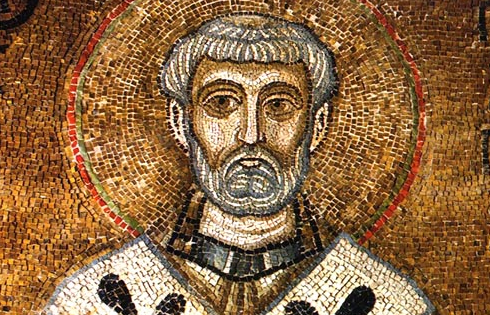
Church fathers Origen1, Eusebius2 and Jerome3 state that this Clement is the “fellow worker” of Paul mentioned in Philippians 4:3. Tertullian4 and Jerome claim Peter entrusted the church in Rome to him.
Eusebius, the father of early church history, places Clement’s bishopric from 92 to 101 AD.5 Irenaeus of Lyons calls him only the 3rd bishop in Rome’s history.6
Around 96 AD Clement of Rome sent a letter (1 Clement)7 to the church in Corinth to quell a budding schism. Young men in the congregation were deposing older leaders. Clement reminds them that the apostles themselves had chosen the first overseers in Corinth as well as their successors. After these the leadership had been succeeded under the watchful eyes of “reputable men with the consent of the whole church” (1 Clement 44:2-3). He goes on to point that these men served blamelessly and with humility.
The epistle of Clement to the church at Corinth was written to bring unity amongst a dividing church. It calls for repentance, humility and unification. It is also the earliest known Christian writing by a leader that was possibly8 the direct student of at least two of the apostles.
In the debate between Orthodox, Catholics and Reformed believers, the nature of apostolic succession hinges on seeing what the early church believed regarding the necessity of preserving a direct line of bishops from the apostles onward. 1 Clement is the first stop in evaluating this office. Was Clement of Rome’s appeal to apostolic appointment to garner trust in the young men — who would undoubtedly have a high view of the Twelve — or a command to preserve the chain of custody? Or both?
Our study of 1 Clement will examine what the importance of apostolic succession was to this early document. Was it for the preservation of doctrinal purity or a legal requirement? Note that 1 Clement reiterates the fact of congregational involvement in choosing leadership.
Our next part will focus on chapters 42 to 44 of Rome’s epistle to Corinth to dissect leadership succession.
___________________________________
- Commentarii in Evangelium Joannis (Commentary on the Gospel of John). Translated by Ronald E. Heine. In Origen: Commentary on the Gospel According to John, Books 1–10. Fathers of the Church 80. Washington, DC: Catholic University of America Press, 1989. (Standard attribution of the Philippians 4:3 identification.) ↩︎
- Historia ecclesiastica 3.15 (and 3.4.10). Translated by Kirsopp Lake. In Eusebius: The Ecclesiastical History. Loeb Classical Library 153. Cambridge, MA: Harvard University Press, 1926. ↩︎
- De viris illustribus 15. Translated by Thomas P. Halton. In Saint Jerome: On Illustrious Men. Fathers of the Church 100. Washington, DC: Catholic University of America Press, 1999. ↩︎
- De praescriptione haereticorum 32. In Tertullian: On the Prescription of Heretics, translated by Peter Holmes, in Ante-Nicene Fathers, vol. 3, edited by Alexander Roberts and James Donaldson. Buffalo, NY: Christian Literature Publishing Co., 1885. ↩︎
- Ecclesiastical History 3.15, in Nicene and Post-Nicene Fathers, Second Series, vol. 1, ed. Philip Schaff and Henry Wace, trans. Arthur Cushman McGiffert (Peabody, MA: Hendrickson, 1994): “In the twelfth year of the same reign [Domitian] Clement succeeded Anencletus after the latter had been bishop of the church of Rome for twelve years.” ↩︎
- Against Heresies 3.3.3, in Ante-Nicene Fathers, vol. 1, ed. Alexander Roberts and James Donaldson (Peabody, MA: Hendrickson, 1994) ↩︎
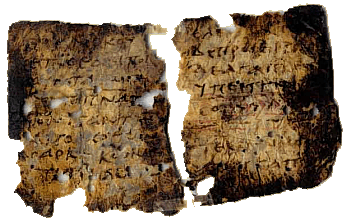
- The earliest substantial surviving copy of 1 Clement in the original Greek is the Codex Alexandrinus (5th century AD), now in the British Library. ↩︎
- Modern scholarship is more cautious. The name Clement was common, the Philippians reference is to someone laboring in or near Philippi decades earlier, and the letter itself is sent in the name of the Roman church without claiming personal discipleship of Peter or Paul. The connection is a later tradition rather than something demonstrated by contemporary evidence. ↩︎