Church Leadership
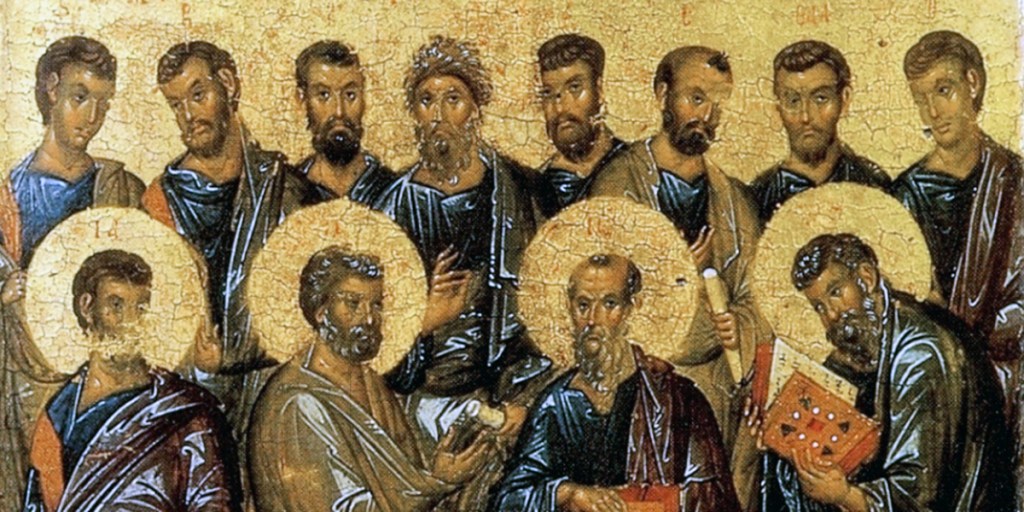
Chapters 11 through 15 of the Didache are details on the structure of church leadership.
Chapter 11 deals with teachers, apostles and prophets. When it comes to receiving “teachers,” Christians are instructed to test them and see if their teaching increases righteousness and adheres to proper doctrine. Their lineage does not matter and isn’t even mentioned, the only important factor is the correctness of their teaching. If they are found to be truthful, they are to be respected as “the decree of the Gospel” commands.
Apostles — missionaries, not the Twelve — are to remain only one or two days with a congregation. If they seek to remain longer or ask for money, they are to be considered false and heretical.
Prophets are to be judged by their teaching and behaviour. They are not to ask for money or be greedy. In short, teachers, apostles and prophets are only to be trusted if their doctrine and behaviour matches that of Christ’s example.
Chapter 12 teaches Christians how to be hospitable to strangers who claim the name of Christ. Again, the beliefs and behaviour of new Christians are to be the mark of their legitimacy. If they want to stay with the community, they are to work and not be idle.
Chapter 13 touches on how to host true prophets. Christians are encouraged to support true prophets and teachers. If there are none, give to the poor.
Chapter 14 is about assembling on the Lord’s Day. Believers are to gather, confess their sins, forgive one another and then “break bread and give thanks” (most likely meaning the Eucharist).
Chapter 15 deals with top tier local church leaders: bishops and deacons. Christians are told to elect their bishops and deacons according to their proven character (e.g.: “not lovers of money”). In the absence of teachers and prophets, bishops and deacons are to fill these roles. The Didache lists a plurality of leaders (as does Acts) without a single one being dominant. In the first century, following the example from Acts, local churches did not differentiate between bishops (episkopos) and priests (presbyteros). Both were considered equal and often were one and the same (Acts 20:17, 28) and labelled simply “elders.” In the second century and beyond, it became customary to have a singular bishop become the chief overseer in a given city. Not so in the earliest church government.
In this chapter, Christians are called to honor their leadership, to forgive one another and to be prayerful and generous “as ye find in the Gospel.”
The final, sixteenth chapter forms a general warning to be vigilant in these end times. Christians are told to gather together frequently. To be watchful of their righteous conduct and to watch out for false prophets and teachers. A warning against the anti christ and “sheep [turned] into wolves.” Those who endure to the end, through the end time tribulations, will participate in glory when the Lord returns.
CONCLUSION
The Didache contains teachings that are a repetition of what is found in the New Testament cannon. Aside from specifically worded prayers and some practical regulations, nothing new or innovative is introduced. Churches are portrayed as autonomous units and are called to form leadership and order amongst themselves. Yet they are presented as being in contact with a wider network of itinerant teachers, missionaries and prophets. Leadership is plural and these men are to be tested carefully to make sure they adhere to “the Gospel.” This model is the earliest structural and governing reality of Christendom: house church networks spread throughout the Roman Empire.